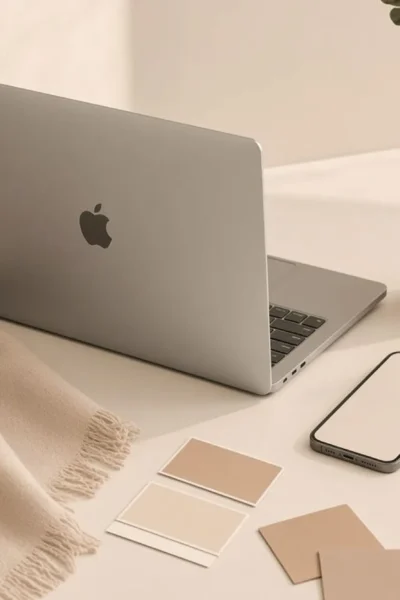
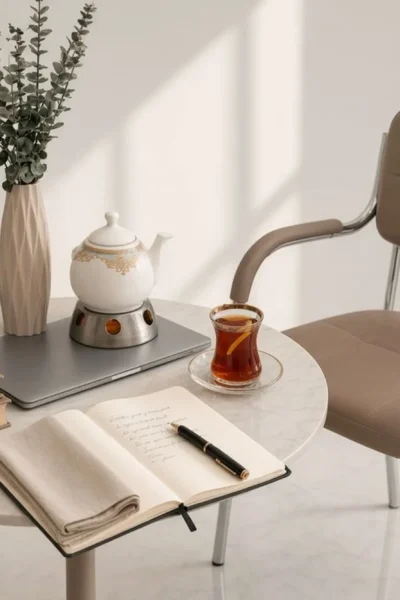
Before a brand is a logo, it is a feeling in the body. Smooth or rough. Warm or cool. Tight or loose. We forget this online, where everything is flat light and sharp edges. Then we wonder why a website feels cold even when the copy says “welcome.”
Textiles bring the body back. Linen that wrinkles. Cotton that softens with use. A throw folded without perfection. These are not decorating tips. They are sensory reminders that trust is tactile — even when the product is digital.
Texture as strategy
In brand work we talk about tone of voice and visual systems. We talk less about texture. Yet texture is often what people remember: the paper of a package, the weight of a tote, the softness of a landing page’s photography. Soft rituals with fabric train that sensitivity.
Spend a minute with cloth in your hands. Notice the weave. Notice how light sits on the folds. That noticing transfers. You become harder to impress with glossy emptiness. You start asking better questions of your own materials: Does this feel like us? Or does it only look expensive?
Softness without vagueness
There is a fear that soft equals unclear. In reality, soft brands that work are precise. They choose a limited palette. They repeat textures on purpose. They allow imperfection where imperfection signals care — a crease in linen, a handmade edge — and remove imperfection where it signals neglect.
Your workspace can rehearse that distinction. Keep one textile that feels like your brand: a linen runner, a wool throw, a cotton napkin in the color you always return to. Use it. Let it wrinkle. Replace it when it is tired. That is maintenance, not mood boarding.
A ritual for digital makers
If most of your day is screens, end one block of work by touching something real. Fold the throw. Smooth the cloth on the table. Reset the physical frame the way you reset a desktop. It sounds minor. It interrupts the scroll-loop. It returns you to scale — human scale — which is where good brand decisions usually live.
People do not fall in love with brands because every pixel is perfect. They fall in love because something feels held. Soft, considered, consistent. Linen teaches that without a lecture. It simply sits there, catching the light, asking you to slow down enough to feel what you are making.
In a world of hard edges, soft texture is not nostalgia. It is differentiation.